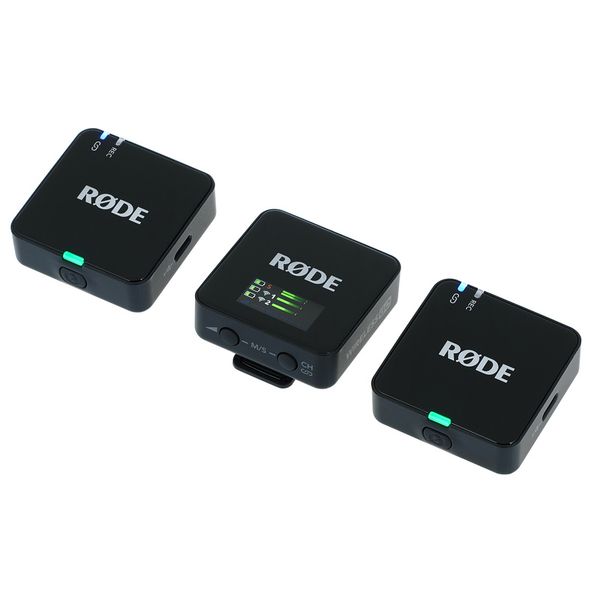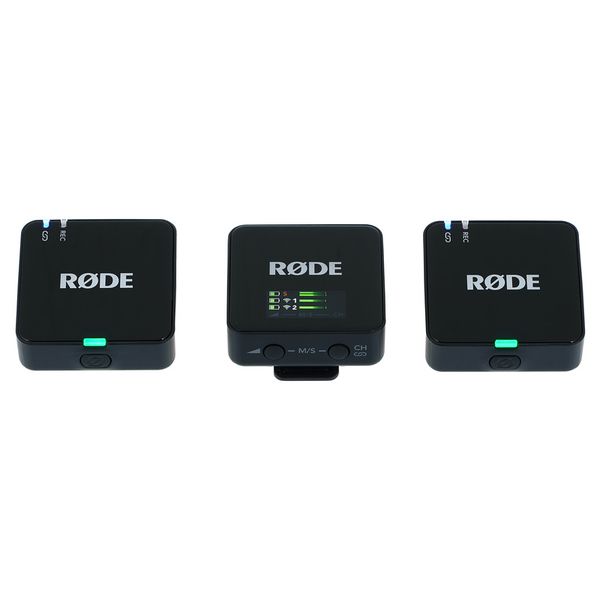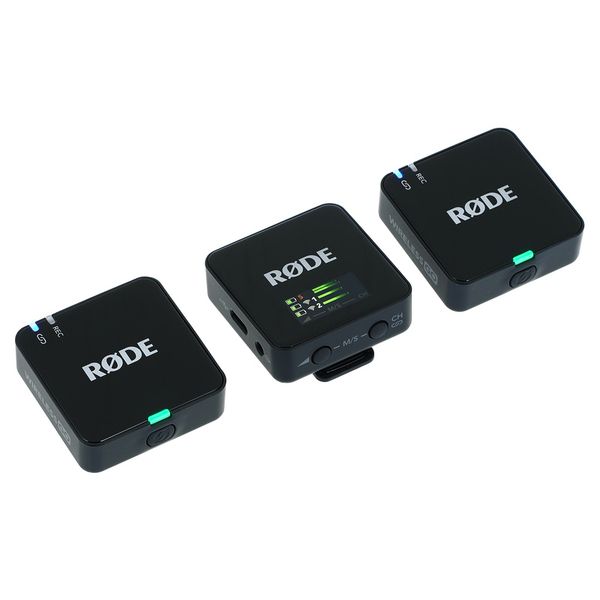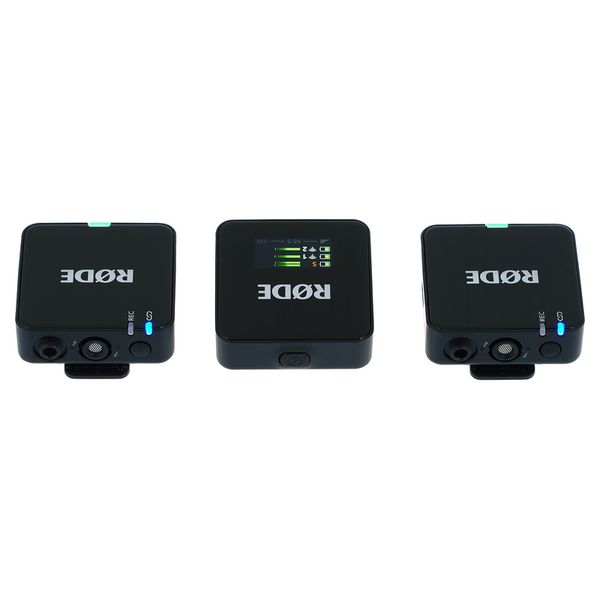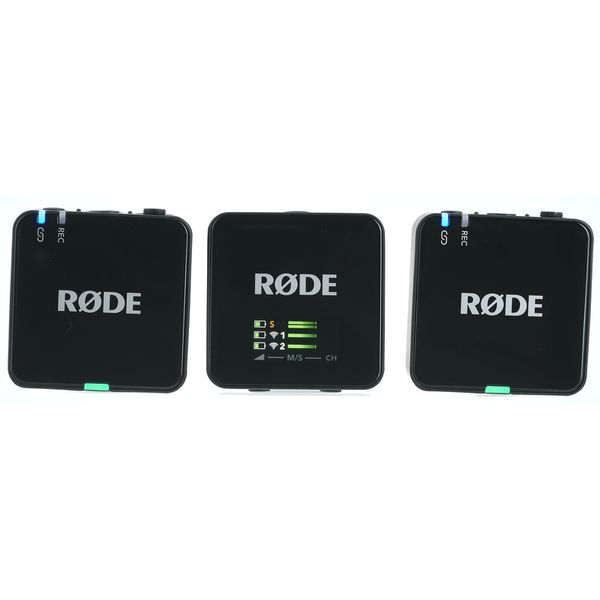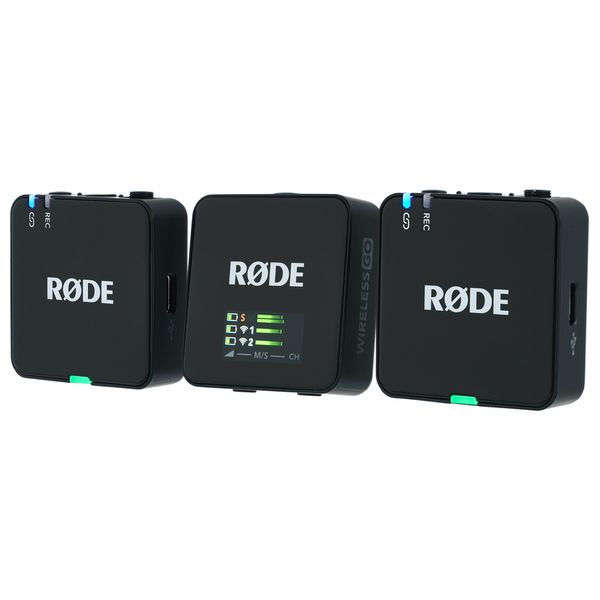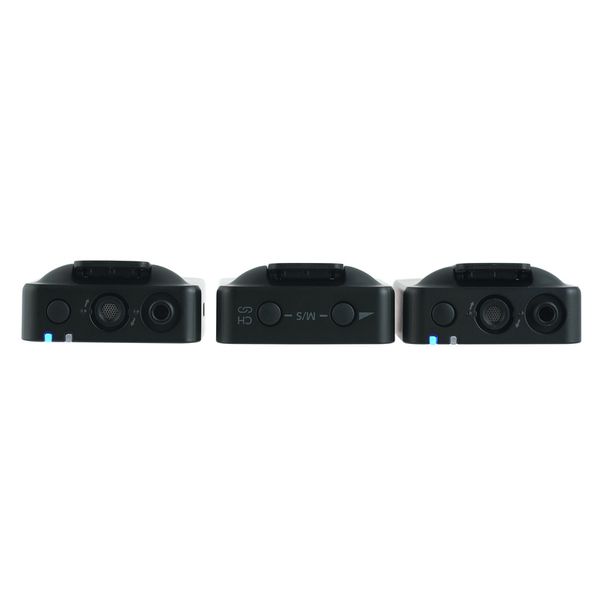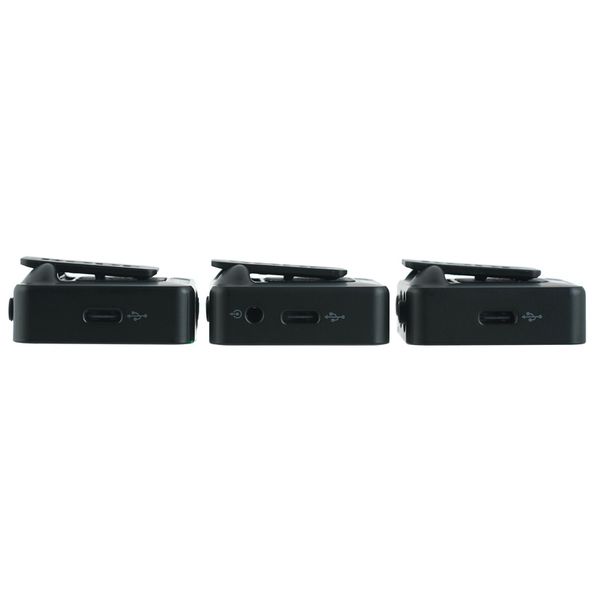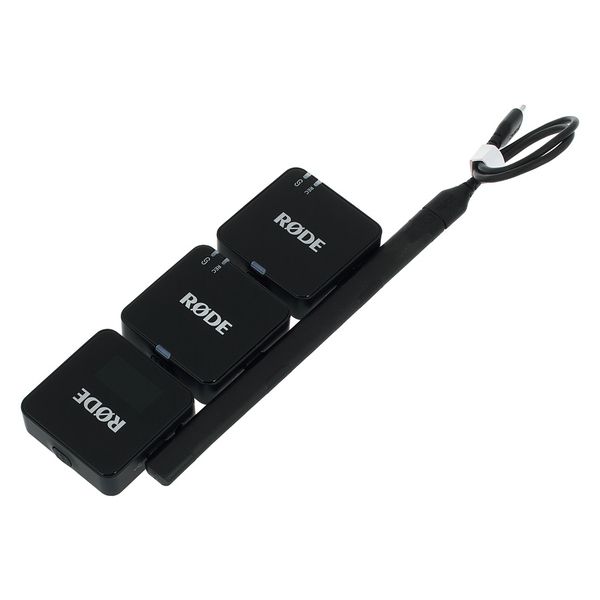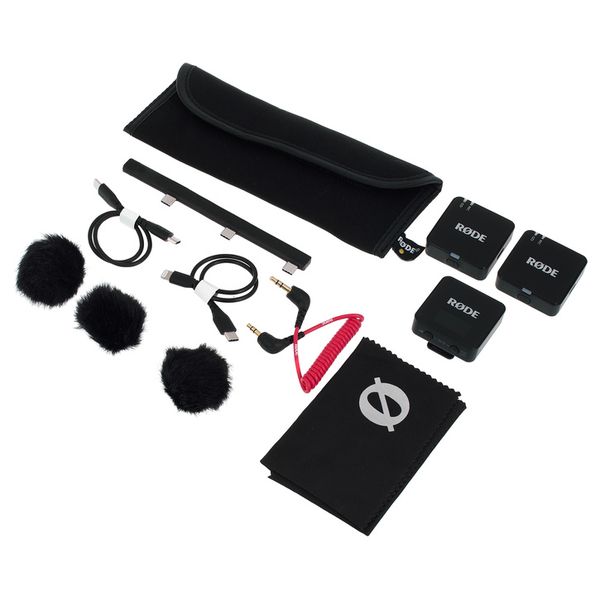
Rode presents the third generation of its Wireless GO system, a compact and intuitive dual-channel wireless microphone solution for filmmakers, presenters, musicians, and content creators at large. The Wireless GO (Gen 3) consists of a receiver with a 3.5mm headset output and two transmitters, each equipped with a built-in omnidirectional microphone and 3.5mm input for external lavaliers. Available in 12 vibrant colors – including black, white, pink, blue, and more – the system allows users to match their gear to their style or environment. The system allows simultaneous 2.4GHz transmission and 32-bit float internal recording, offering increased headroom and near-elimination of distortion. Up to 40 hours of audio can be stored internally in three selectable modes, and GainAssist technology automatically adjusts input levels in real time, ensuring clean recordings in any environment – whether indoors or outdoors.
Each transmitter features a built-in omnidirectional condenser microphone, capturing sound evenly from all directions. This ensures every voice is recorded clearly, no matter where it comes from – making the system ideal for quick setups, interviews, or dynamic environments. For more tailored audio capture, users can connect an optional lavalier microphone or a headset mic via the 3.5mm input on each transmitter. A dedicated record button next to the microphone provides instant start/stop control, while a phase inversion switch on the underside resolves any alignment issues. The receiver supports three recording modes: Merged Mode combines both signals into a single track, Split Mode records each signal separately for individual editing (separate tracks), and finally Safety Channel creates a backup track at -10 dB, ensuring distortion-free audio even if unexpected volume spikes occur.
Designed for video professionals, journalists, and mobile filmmakers, the Rode Wireless GO (Gen 3) prioritizes ease of use without sacrificing performance and provides an intuitive solution for capturing audio in spontaneous settings – whether on the way to a concert, during band rehearsals, or in the studio. Since no technical expertise is required, it is perfect for fast-paced environments where reliability is key. The system is compatible with Android, iOS devices, computers, and cameras, and its 260m line-of-sight range ensures stable transmission even over long distances. For added security, the Safety Channel records a second track at -10 dB, providing a backup track for unexpected volume spikes.
Founded in Sydney, Australia in 1990, Rode is a specialist in high-quality studio microphones. With its very first in-house, completely Australian-built model, the NT2 large-diaphragm microphone, the company created a classic which is still produced in its current and enhanced version, the NT2-A. An extensive range of studio and live microphones has also been added, regularly updated, and expanded over the years. These new additions include a variety of professional microphones which are designed for video and mobile applications and can be connected directly to SLR cameras or smartphones.
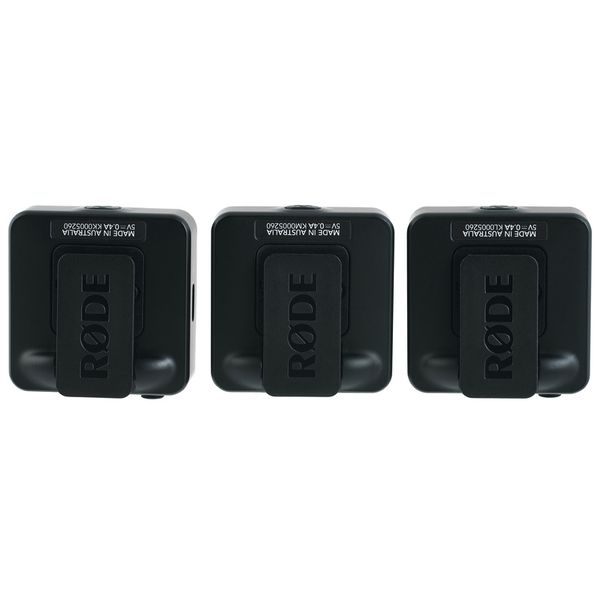
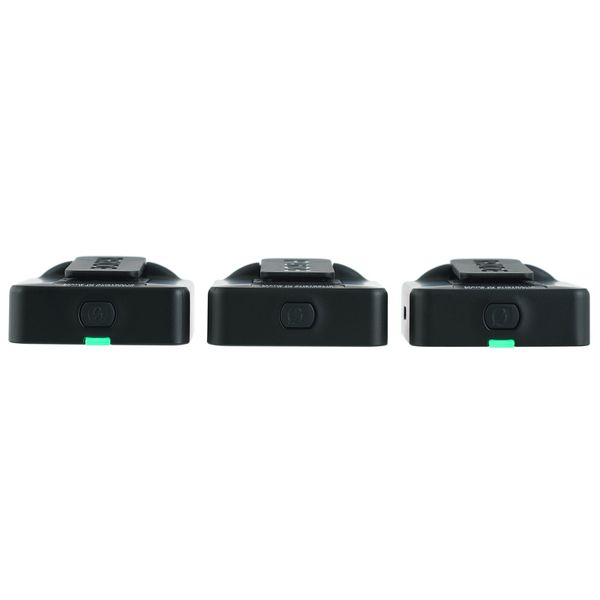
The receiver unit of Rode Wireless GO (Gen 3) outputs audio in either digital or analogue format – via the USB-C port or the 3.5mm output jack – and simply connects with cameras, smartphones, or other recording devices. Users of other Rode Series IV wireless solutions can pair the transmitters with devices like the Rodecaster Pro II or the Rodecaster Video. Thanks to their innovative clip design, the transmitters can be securely mounted on belts, pockets, collars, or cold shoe adapters such as the Rode DCS-1. All components are powered by built-in lithium-ion batteries, providing up to seven hours of operation on a full charge.
Omnidirectional polar pattern
Omnidirectional microphones capture sound equally from all directions (360°), creating a natural, open sound that's ideal for dialogue, interviews, or multi-speaker settings. This non-directional design ensures consistent audio quality regardless where the talent's standing, making it perfect for spontaneous recordings where mic placement can't be controlled. However, in noisy or acoustically untreated environments, omnidirectional mics can also pick up unwanted background noise. For situations requiring focused audio capture, directional patterns – such as cardioid or supercardioid – are often preferred, as they isolate the sound source while minimizing ambient interference.